A pump station might seem like a straightforward utility structure from the outside, but in practice, no two projects are exactly the same. One location may require to transfer wastewater upwards from a newly constructed housing development, while another could need to keep water pressure steady across a commercial property with changing elevations and growing demand. Some projects are considered municipal, others are private or industrial and each has distinct design requirements as well as regulations and long-term operational expectations.
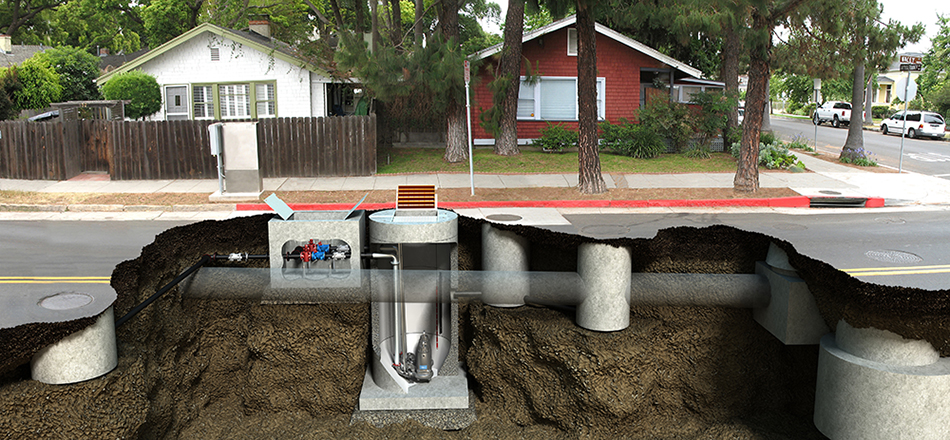
Pumping systems can’t be designed to be adapted to every situation. A successful station must take into consideration the actual conditions of the location. This includes the rate of flow, the requirements for ownership as well as the future of any property it is serving. Romtec Utilities approaches each project in this manner, modifying the pumping system to the needs of the project, rather than forcing a generic solution to work.
Pumping goes beyond moving water.
The basic idea behind a pumping station exists to move wastewater or water in cases where gravity alone is not able to do the job. But constructing a system that does what it is supposed to do is not enough. It has to be efficient, reliable, easy to use and comply with local and state requirements. It has to be able to perform not just in terms of theory however, it must also function every day for the individuals who are responsible for using it.
This encompasses everything from structural plans and wet-well sizes, to electrical systems, communications equipment, and the access for maintenance teams. If one of these parts isn’t well-planned, it can cause operating issues for years. This is why owners and engineers place great importance on working with the most skilled lift station design experts. It is important to have experience in order to manage the hydraulic performance, durability, time, budget and site restrictions simultaneously.
Romtec Utilities brings these fields all under one roof. Instead of requiring customers to collaborate with multiple suppliers the company takes care of all electrical, structural, mechanical, and communication parts as a system. This single source approach typically saves time during the design phase, cuts down on confusion when purchasing, and creates a smoother way to installing.
Package pumping systems are simpler when designed correctly.
A package pumping system can simplify infrastructure projects as it combines key components into a unified solution. The most important thing is how it has been created. Poorly matched systems can cause difficulties with performance, excessive cost of equipment, and long-term maintenance issues.
Romtec Utilities approaches each package as a complete, engineered solution instead of a typical catalog item. It is because the particular site’s requirements will determine which pumps, controls valves, piping and enclosures will be most suitable for. It is also crucial to think about how the system will be monitored, the ways that users will have access to it, and what type of maintenance it will require over time. A coordinated planning process will help avoid bigger issues with utility infrastructure.
Booster pump stations address a different kind of infrastructure problem
Every project may not be about wastewater. In many cases, maintaining water pressure is as important as removing the sewage. This is why booster pumps play a critical role. These systems are designed for water to flow easily through a system even when the pressure is lower due to changes in elevation, the length of pipes, or the high demand.
Booster systems require an unique engineering approach, as they may include SCADA integration and variable frequency drives (VFDs) as well as telemetry and architectural considerations, based on the area. Romtec Utilities designs the stations by using the same approach as wastewater systems in order to make sure that the final product is functional and efficient.
Planning better leads to higher long-term performance
One of the most beneficial elements of the Romtec Utilities process is the initial design support it offers customers. The design and engineering support allows teams on project teams to gain a better understanding of the size, scope, and costs of the installation prior to when they get too far into procurement or construction. That can make a major difference for consultants, developers and government agencies who are trying to keep projects on track and within budget.
If it’s a wastewater lift station the need for a package pumping solution or a number of custom booster pumps, the key to success is designing. The right design partner does more than provide equipment. They can assist in creating an option that is durable, suits the site as well as the needs of the owner and will last for a long time.
The most reliable utility systems that work are usually the ones which the general public does not observe because they are simply working. That kind of reliability seldom happens on accident. It’s the result of careful engineering, good coordination and a thorough understanding of how to design each system to what is needed by the project.